Lysine
Introduction
Lysine is an essential amino acid that plays a vital role in protein synthesis, growth, and overall animal performance. L-Lysine is the naturally occurring and biologically active form of lysine, while DL-Lysine contains both L-lysine and D-lysine.
L-Lysine Hydrochloride (L-Lysine HCl) is the hydrochloride salt of L-lysine. It offers high water solubility and good stability, making it widely used as a nutritional ingredient in animal feed and in other food and pharmaceutical applications.
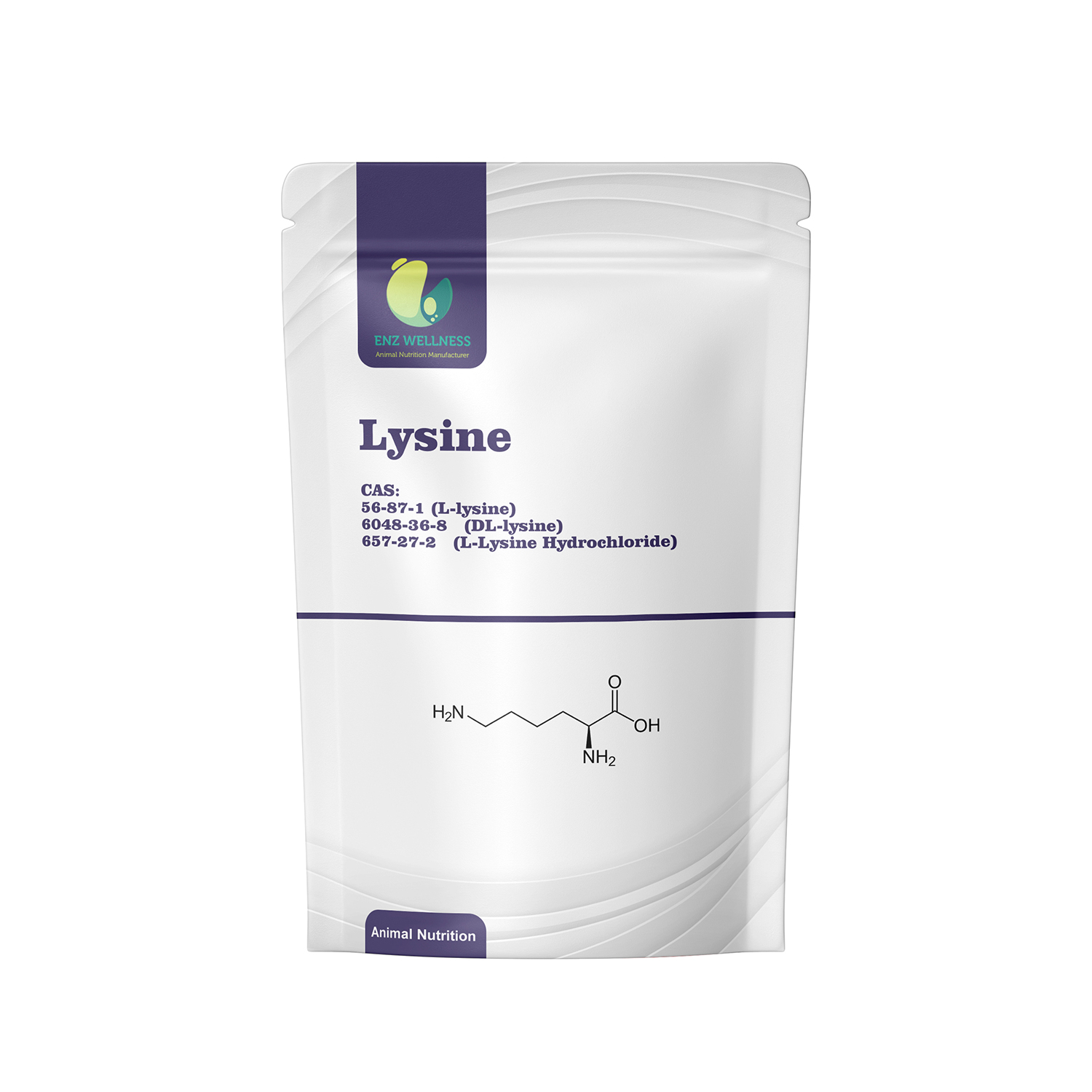
CAS No.
- L-Lysine: 56-87-1
- DL-Lysine: Verify against current supplier specification
- L-Lysine Hydrochloride: 657-27-2
Molecular Formula: C₆H₁₄N₂O₂
Structural Formula: NH₂-(CH₂)₄-CH(NH₂)-COOH
Physicochemical Properties
L-Lysine is a white crystalline powder with an odorless or slightly characteristic odor and a slightly bitter taste. It is readily soluble in water and practically insoluble in ethanol and ether.
L-Lysine Hydrochloride is a white to almost white crystalline powder with little to no odor and a slightly bitter taste. It is highly soluble in water and offers good stability for feed and nutritional applications.
Application
Lysine is widely used as an essential amino acid feed additive in poultry, swine, livestock, and other animal nutrition applications. It is one of the key amino acids used to formulate balanced diets and meet animals’ specific nutritional requirements.
As an essential amino acid, lysine plays an important role in protein synthesis, muscle development, tissue formation, and growth. Supplementation with lysine can help:
- Support protein synthesis and muscle development
- Promote healthy growth and development
- Optimize dietary amino acid balance
- Improve feed utilization and nutritional efficiency
- Support tissue and bone development
- Help maintain normal physiological and immune functions
- Support overall animal health and production performance
Lysine supplementation is particularly important in modern feed formulations, where precise amino acid nutrition helps reduce nutritional deficiencies, optimize feed efficiency, and support consistent animal performance.
Lysine is available in different forms, including L-Lysine and L-Lysine Hydrochloride, allowing feed manufacturers to select the appropriate source according to formulation requirements, concentration, solubility, and application.