Cellulase
1. Introduction
Cellulase refers to a group of enzymes that work together to hydrolyze cellulose, the primary structural polysaccharide in plant cell walls. A typical cellulase system may include endoglucanase, exoglucanase (cellobiohydrolase), and β-glucosidase, which act at different stages of cellulose degradation and ultimately convert cellulose into soluble sugars such as glucose.
As a feed enzyme additive, cellulase can help break down plant cell-wall components and improve the accessibility of nutrients contained within fibrous feed materials. It is particularly relevant to roughage-based diets and feed ingredients with high fiber content.
2. CAS No.
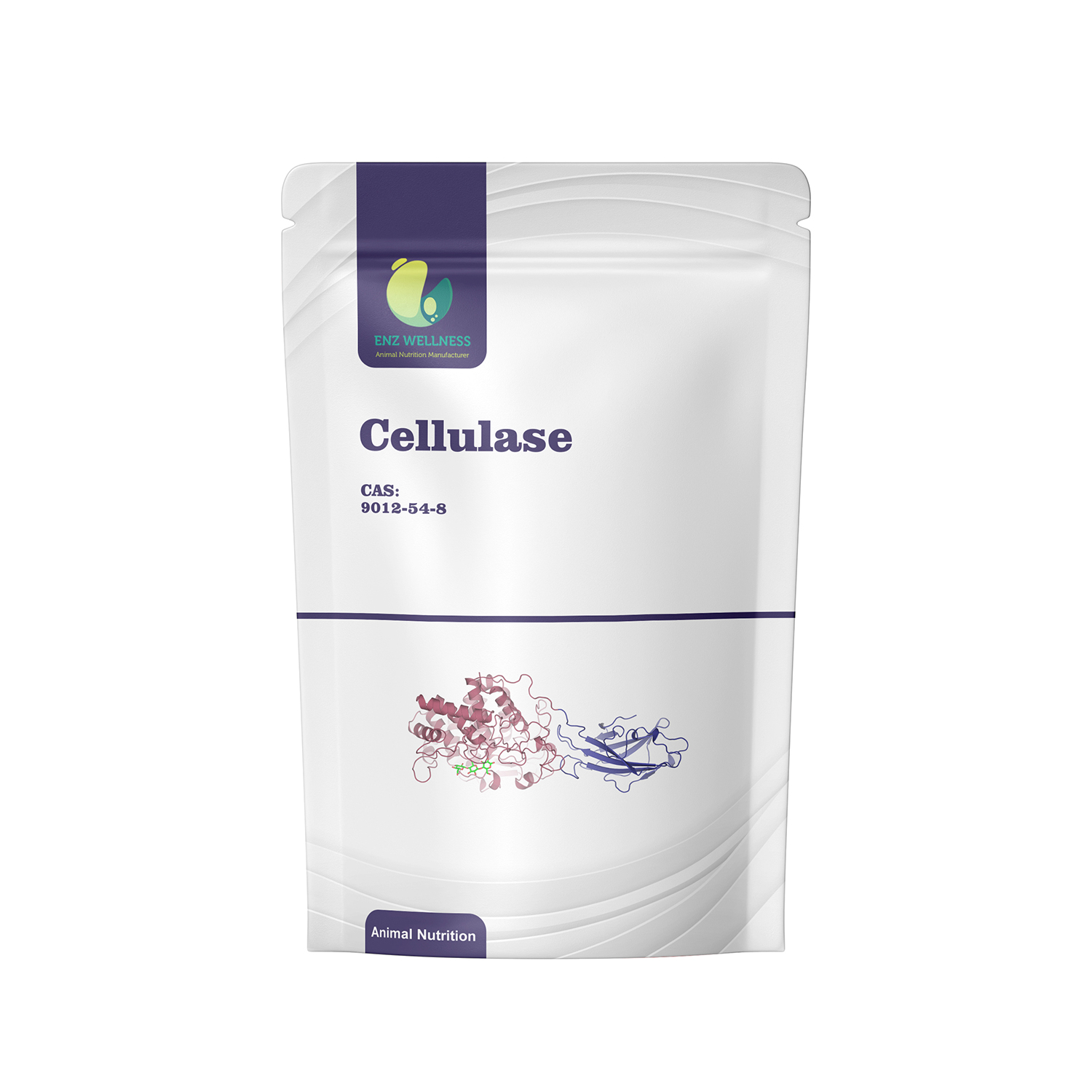
9012-54-8
3. Structural Formula
Complex protein / enzyme
Cellulase is an enzyme preparation rather than a single small-molecule compound, so it does not have one simple molecular structural formula. Its composition and enzyme activities vary according to the microbial source and production process.
4. Physicochemical Properties
- Appearance: White to light-yellow powder or liquid, depending on the formulation
- Solubility: Generally soluble or dispersible in water or suitable buffer solutions
- Enzyme nature: Protein-based biological catalyst
- pH stability: Varies according to the cellulase source and formulation
- Temperature stability: Sensitive to excessive heat; enzyme activity may decrease during high-temperature feed processing
- Storage: Store in a cool, dry environment and protect from moisture and excessive heat
5. Application and Benefits
Cellulase is primarily used as a feed enzyme additive to support the utilization of fibrous, plant-based feed ingredients.
Its major applications include:
- Cellulose degradation: Hydrolyzes cellulose and related plant cell-wall components into smaller carbohydrate fragments.
- Improved fiber utilization: Helps make fibrous feed materials more accessible to digestive processes.
- Nutrient release: Degradation of plant cell walls may improve the accessibility of nutrients physically enclosed within plant tissues.
- Roughage utilization: Particularly relevant to ruminant diets containing grass, hay, straw, and other fibrous feed materials.
- Feed formulation support: Can be used as part of enzyme blends designed to improve the utilization of plant-based feed ingredients.
- Livestock applications: Commonly considered for cattle, sheep, goats, and other ruminants, as well as selected applications in poultry and swine depending on diet composition and enzyme formulation.
The effectiveness of cellulase depends on enzyme activity, dosage, fiber composition, feed processing, animal species, rumen or gastrointestinal conditions, and the characteristics of the feed ingredients.
For monogastric animals, the effectiveness of cellulase can vary considerably depending on the type and level of dietary fiber. Product-specific feeding trials and enzyme activity specifications should therefore be considered when determining the appropriate inclusion level.