Glutamic Acid
Introduction
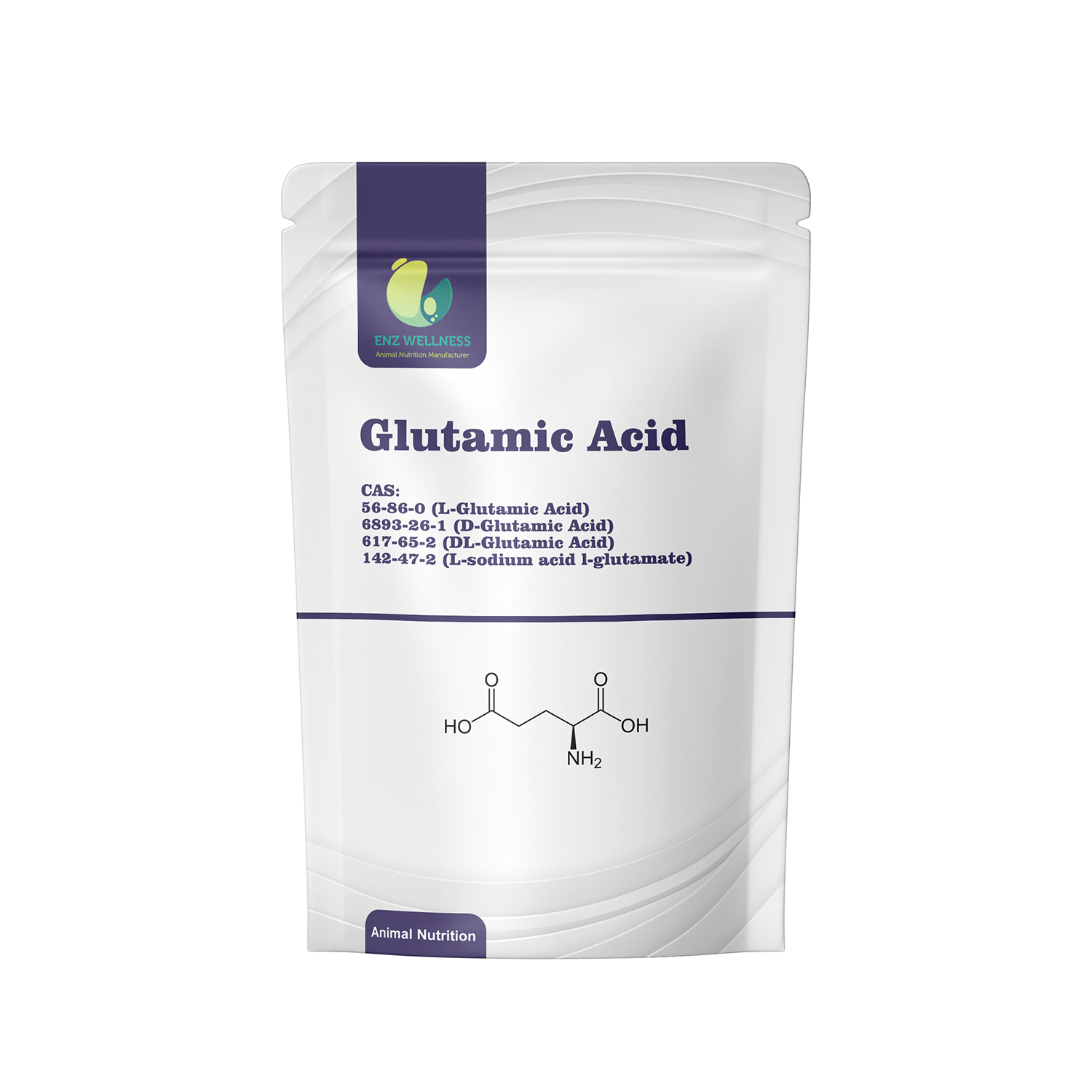
L-Glutamic Acid is the naturally occurring and biologically active form of glutamic acid. D-Glutamic Acid is the D-isomer, while DL-Glutamic Acid is a mixture of L-glutamic acid and D-glutamic acid.
Glutamic acid is a non-essential amino acid that can be synthesized by animals. Its sodium salt, Monosodium Glutamate (MSG), is widely known for its characteristic umami taste and high water solubility and is used in food and nutritional applications.
CAS No.
- L-Glutamic Acid: 56-86-0
- D-Glutamic Acid: 6893-26-1
- DL-Glutamic Acid: 617-65-2
- Monosodium Glutamate (MSG): 142-47-2
Molecular Formula: C₅H₉NO₄
Structural Formula: HOOC-(CH₂)₂-CH(NH₂)-COOH
Physicochemical Properties
L-Glutamic Acid is a white crystalline powder with an odorless or slightly characteristic odor and a slightly acidic taste. It is slightly soluble in water and practically insoluble in ethanol, ether, and chloroform.
Monosodium Glutamate (MSG) is a white crystalline powder that is readily soluble in water and has a characteristic umami taste.
Application
Glutamic acid and its salts are widely used in food, nutrition, and animal-feed applications. As a non-essential amino acid, glutamic acid can be synthesized by animals; however, dietary supplementation may provide additional nutritional and functional benefits in specific feed formulations.
In animal nutrition, glutamate is involved in amino acid metabolism, protein synthesis, and intestinal nutrient utilization. Glutamate supplementation, particularly in appropriate formulations, may also contribute to feed palatability and support normal intestinal development and function.
Glutamic acid and its salts can be used to:
- Support amino acid metabolism and protein synthesis
- Contribute to normal intestinal function
- Support intestinal development and nutrient utilization
- Improve feed palatability in appropriate formulations
- Provide a source of glutamate for animal nutrition
- Support overall nutritional efficiency and animal performance
Glutamic acid and glutamate-based ingredients can be incorporated into feed formulations for poultry, swine, livestock, aquaculture, and other animal nutrition applications, depending on formulation requirements and intended use.