Phytase
1. Introduction
Phytase is a group of phosphatase enzymes that catalyze the hydrolysis of phytic acid (myo-inositol hexakisphosphate, IP6) and its lower-phytate derivatives. This process releases phosphate and progressively degrades phytate, increasing the availability of phosphorus and reducing the mineral-binding effect of phytate in animal feed.
Phytase is widely used as a feed enzyme additive in poultry, swine, livestock, and other animal nutrition applications. By improving phytate phosphorus utilization, it can help optimize mineral nutrition, reduce the need for supplemental inorganic phosphorus, and lower phosphorus excretion into the environment.
2. CAS No.
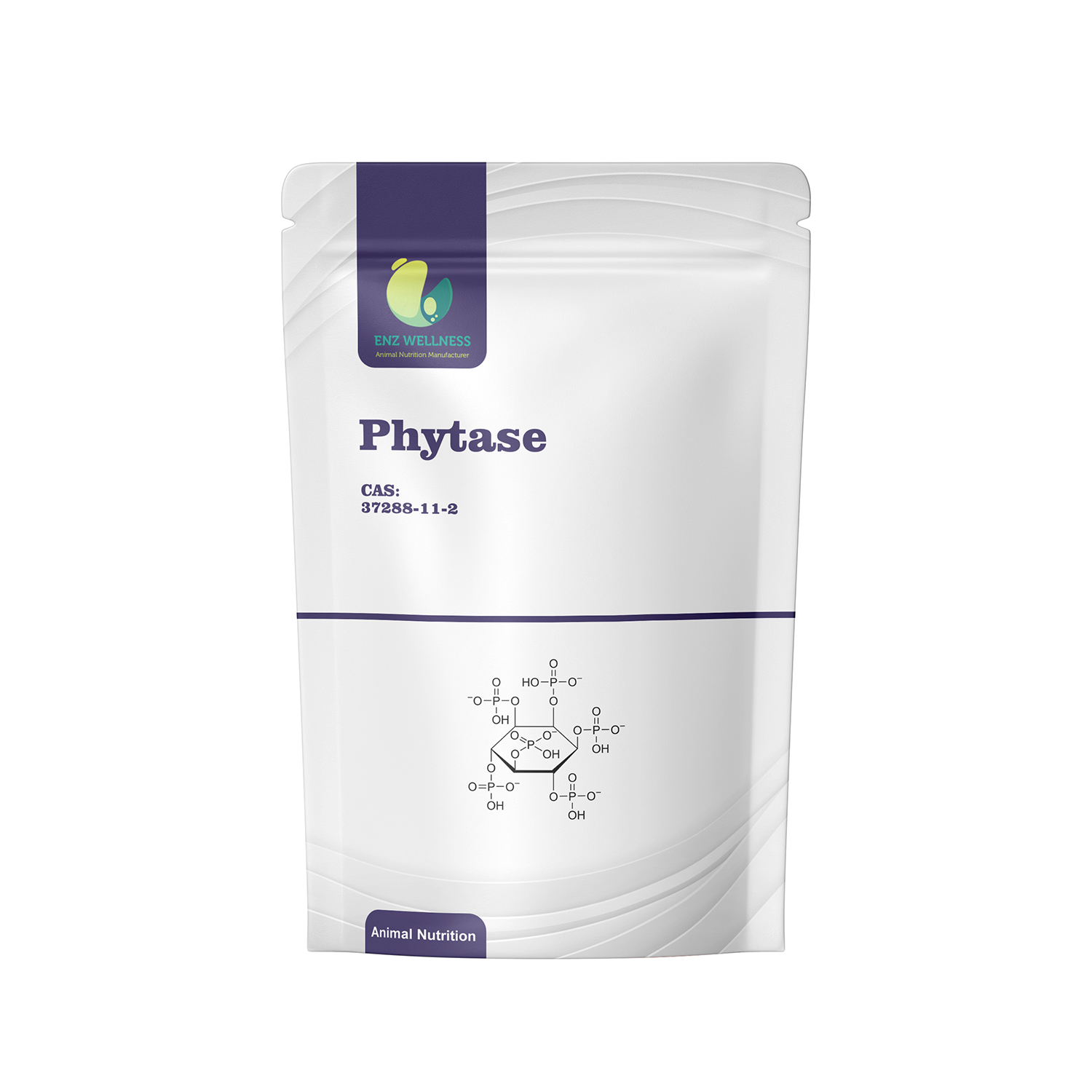
37288-11-2
Technical note: Phytase is an enzyme/protein rather than a single small-molecule chemical, so the CAS number and product specification should be verified against the exact commercial phytase preparation being supplied.
3. Structural Formula
Complex protein / enzyme
Phytase does not have a single simple structural formula because it is a protein enzyme whose molecular structure varies according to its biological source and production method.
4. Physicochemical Properties
- Appearance: White to light-yellow powder, depending on formulation
- Solubility: Generally soluble or dispersible in water or suitable buffer solutions
- Enzyme nature: Protein-based biological catalyst
- pH stability: Depends on the phytase source and formulation; different phytases have different optimal pH ranges
- Temperature stability: Heat sensitive to varying degrees; excessive processing temperatures may reduce enzyme activity
- Storage: Store in a cool, dry place and protect from excessive heat and moisture
5. Application and Benefits
Phytase is primarily used as a feed enzyme additive to improve the nutritional value and phosphorus utilization of plant-based feed ingredients.
Its major applications include:
- Improved phosphorus utilization: Hydrolyzes phytate and releases phosphorus that would otherwise have limited availability.
- Reduced phytate binding: Degrades phytate, helping reduce its ability to bind minerals and other nutrients.
- Better mineral utilization: May improve the availability of minerals such as calcium and zinc.
- Feed formulation optimization: Can help reduce dependence on supplemental inorganic phosphorus when appropriately formulated.
- Environmental benefits: Improved phosphorus utilization can reduce phosphorus excretion in animal manure.
- Broad animal-feed application: Commonly used in poultry, swine, livestock, and other feed formulations containing plant-based ingredients.
The effectiveness of phytase depends on enzyme activity, dosage, feed composition, processing conditions, pH, animal species, and gastrointestinal conditions. Product-specific enzyme activity should be expressed according to the manufacturer’s declared activity unit and specification.