Zinc Sulfate
Introduction
Zinc Sulfate is an important trace mineral feed additive and a reliable source of dietary zinc for animal nutrition. Zinc is an essential trace element involved in numerous enzymatic and physiological processes, including protein synthesis, growth and development, skin and tissue integrity, immune function, reproductive performance, and antioxidant defense.
In animal feed, Zinc Sulfate is commonly incorporated into mineral premixes and compound feeds to help meet animals’ dietary zinc requirements and maintain normal physiological functions.
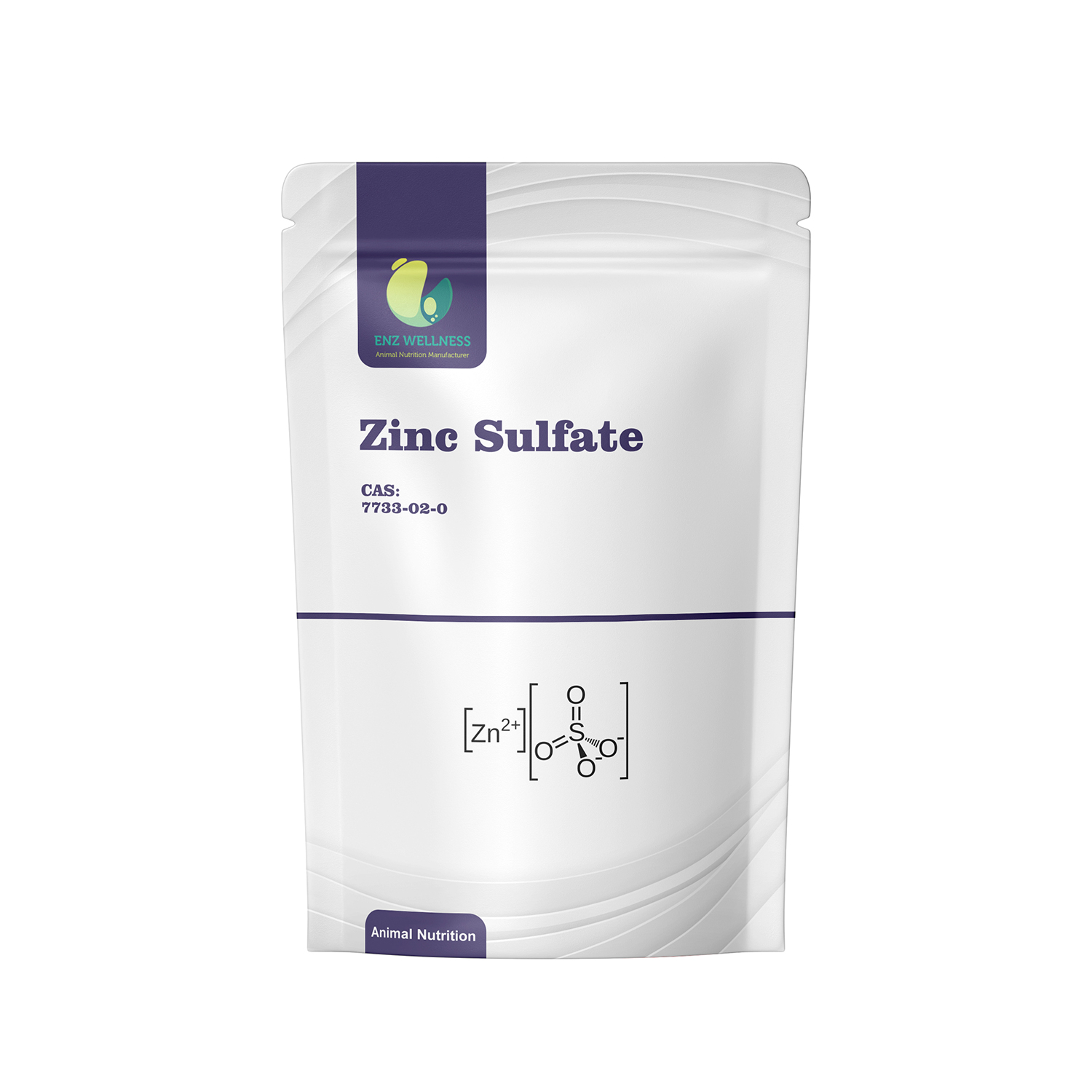
CAS
7733-02-0 — Zinc Sulfate
Molecular Formula
ZnSO₄
For the commonly used hydrated form:
ZnSO₄·H₂O — Zinc Sulfate Monohydrate
Structural Formula
ZnSO₄
Physicochemical Properties
Zinc Sulfate is generally a white crystalline powder or granulated material and is readily soluble in water. It is practically insoluble in ethanol.
Commercial Zinc Sulfate may be supplied in different hydration states, such as anhydrous Zinc Sulfate or Zinc Sulfate Monohydrate. The product is hygroscopic and should be stored in a cool, dry, well-sealed environment to minimize moisture absorption and maintain product quality.
Application
Zinc Sulfate is widely used as a trace mineral feed additive in poultry, swine, livestock, ruminant, and other animal nutrition applications.
Zinc is an essential component or activator of numerous enzymes and is involved in protein and nucleic acid metabolism, cell division, tissue development, immune function, and maintenance of epithelial tissues.
Adequate zinc supplementation helps:
- Provide a reliable source of dietary zinc
- Support normal growth and development
- Contribute to protein and nucleic acid metabolism
- Support healthy skin, hoof, hair, feathers, and epithelial tissues
- Support normal immune function
- Contribute to reproductive health and performance
- Support antioxidant defense and cellular protection
- Help prevent zinc deficiency
- Maintain normal physiological functions and overall animal performance
Zinc Sulfate can be incorporated into mineral premixes, vitamin-mineral premixes, compound feeds, and nutritional supplements according to species-specific nutritional requirements and applicable feed regulations.