Vitamin A
Introduction
Vitamin A is a collective term for a group of fat-soluble compounds with vitamin A activity, including retinol and its derivatives. It is an essential nutrient for animals and plays an important role in vision, growth and development, epithelial tissue maintenance, immune function, reproduction, and overall health.
In animal nutrition, vitamin A is commonly supplied through stabilized or formulated vitamin preparations to improve handling, storage stability, and feed-processing performance.
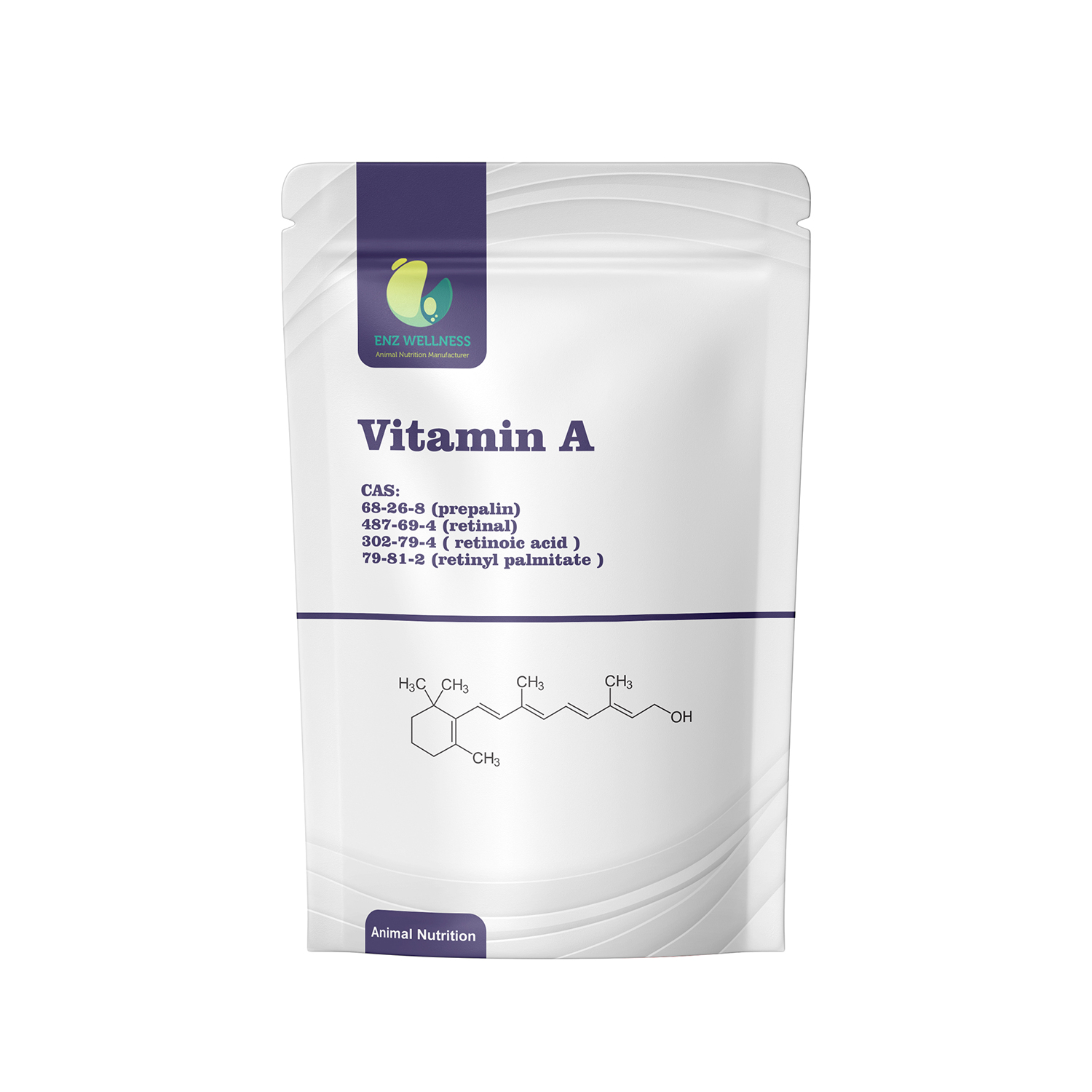
CAS No.
- Retinol (Vitamin A): 68-26-8
- Retinal: 487-69-4
- Retinoic Acid: 302-79-4
- Retinyl Palmitate: 79-81-2
Molecular Formula of Retinol: C₂₀H₃₀O
Structural Formula: C₂₀H₃₀O
Physicochemical Properties
Vitamin A compounds have different physical and chemical properties depending on their specific form.
Retinol is typically a light-yellow crystalline solid or oily liquid. It is practically insoluble in water and soluble in organic solvents. Retinol is sensitive to light, heat, and oxygen and therefore requires appropriate protection during storage and handling.
Retinal is generally yellow in appearance and has properties similar to retinol, including sensitivity to light and oxidation.
Retinoic Acid is a yellow crystalline powder that is practically insoluble in water and soluble in organic solvents. It is sensitive to light.
Retinyl Palmitate is a light-yellow oily material and is relatively more stable than free retinol, making esterified forms useful in certain vitamin A formulations.
Application
Vitamin A is an essential fat-soluble vitamin widely used in poultry, swine, ruminant, aquaculture, and other animal nutrition applications. It is an important component of balanced feed formulations and helps meet animals’ nutritional requirements.
Vitamin A plays important roles in:
- Supporting normal vision and visual function
- Promoting healthy growth and development
- Maintaining normal epithelial a