Pantothenic Acid (Vitamin B5)
Introduction
Pantothenic Acid, also known as Vitamin B5, is an essential water-soluble vitamin required for normal growth, development, and metabolism in animals. It is a key component of Coenzyme A (CoA) and is therefore involved in numerous metabolic pathways, including energy production, fatty acid metabolism, and the synthesis of important biological compounds.
Pantothenic acid naturally occurs primarily as D-pantothenic acid. In animal feed and nutritional formulations, Calcium Pantothenate is widely used as a stable and convenient source of Vitamin B5.
D-Panthenol is the alcohol analogue of pantothenic acid and is mainly used in cosmetic and pharmaceutical applications. For animal feed products, Calcium Pantothenate is generally the more relevant commercial form.
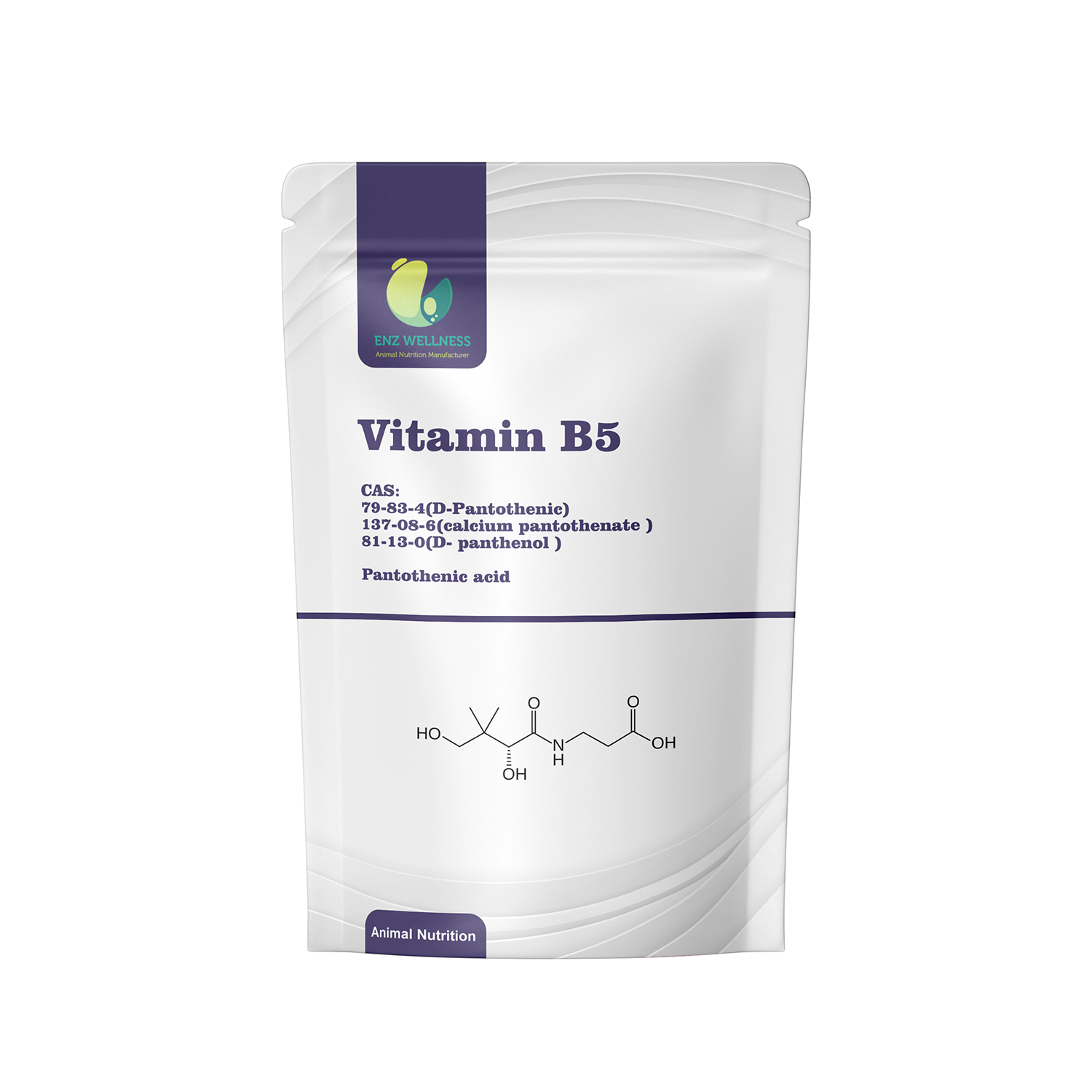
CAS
- 79-83-4 — D-Pantothenic Acid
- 137-08-6 — Calcium Pantothenate
- 81-13-0 — D-Panthenol
Molecular Formula
- D-Pantothenic Acid: C9H17NO5
- Calcium Pantothenate: C18H32CaN2O10
- D-Panthenol: C9H19NO4
Structural Formula
Pantothenic acid consists of a pantoic acid moiety linked to β-alanine. Calcium Pantothenate is the calcium salt of pantothenic acid and is widely used as a feed-grade Vitamin B5 source.
Physicochemical Properties
D-Pantothenic Acid:
D-Pantothenic acid is a colorless to slightly yellow, viscous liquid. It is readily soluble in water and soluble in acetic acid, with limited solubility in ether. Free pantothenic acid is relatively sensitive to heat and certain pH conditions.
Calcium Pantothenate:
Calcium Pantothenate is a white crystalline powder, generally odorless with a slightly bitter taste. It is readily soluble in water and soluble in glycerol. Compared with free pantothenic acid, it offers improved stability and is therefore widely used in nutritional and feed formulations. It should be protected from excessive moisture during storage.
D-Panthenol:
D-Panthenol is a colorless, viscous liquid or white crystalline solid and is readily soluble in water, ethanol, and propylene glycol. It is relatively stable under normal storage conditions.
Application
Pantothenic Acid is an essential nutrient widely used in poultry, swine, livestock, ruminant, and other animal nutrition applications. As a component of Coenzyme A, Vitamin B5 plays a central role in energy metabolism and the metabolism of carbohydrates, proteins, and fatty acids.
Adequate Vitamin B5 supplementation helps:
- Support energy metabolism and nutrient utilization
- Contribute to fatty acid synthesis and metabolism
- Support normal carbohydrate and protein metabolism
- Maintain healthy skin, epithelial tissues, and mucous membranes
- Support normal growth and development
- Contribute to normal reproductive function
- Help prevent Vitamin B5 deficiency
- Support overall animal health and production performance
Calcium Pantothenate is commonly incorporated into vitamin premixes, compound feeds, animal feed, and nutritional supplements as a stable source of Vitamin B5.