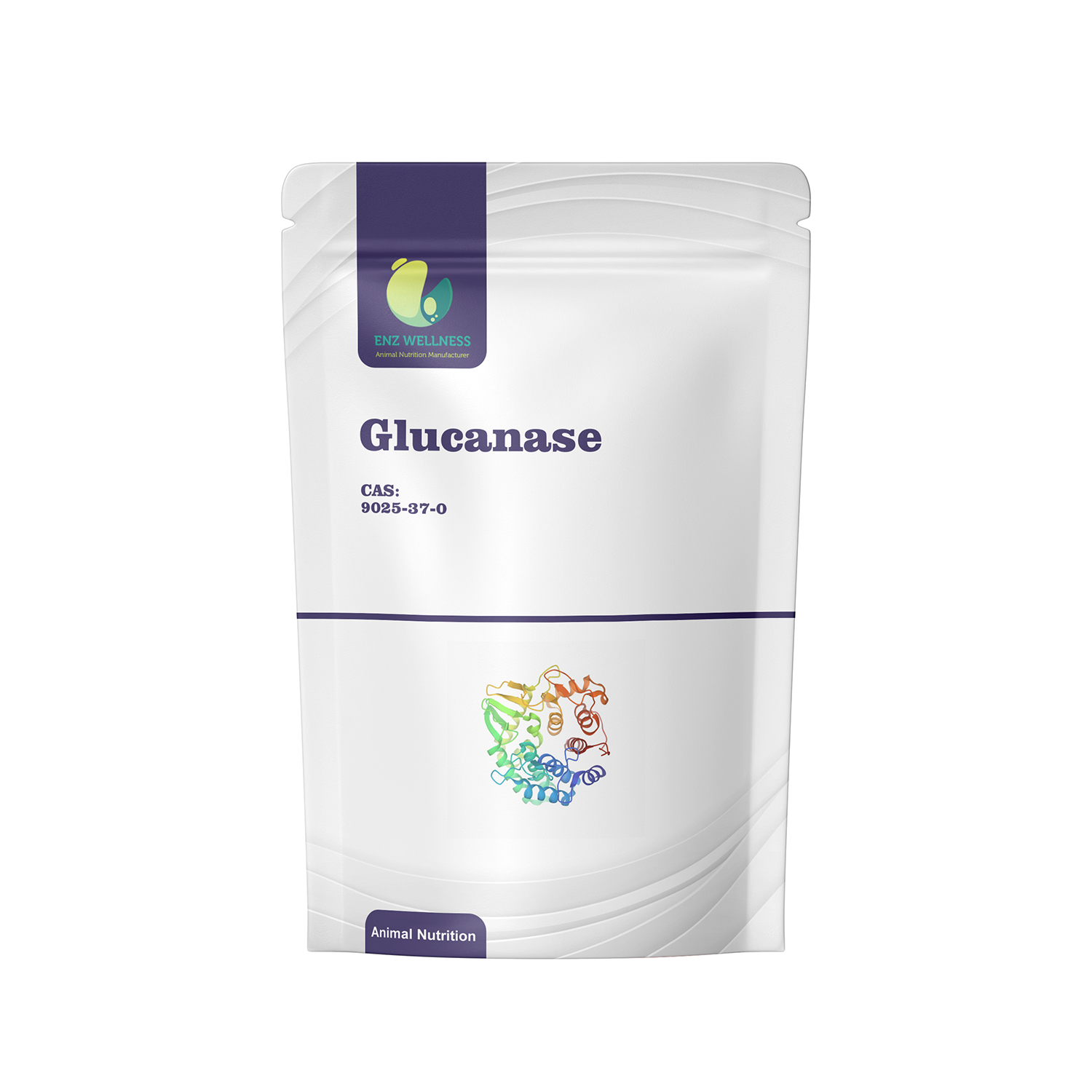
Glucanase
1. Introduction
Glucanase is a group of enzymes that catalyze the hydrolysis of glucans, particularly β-glucans containing β-glycosidic bonds. In animal feed applications, β-glucanase is commonly used to break down soluble β-glucans present in cereal grains such as barley and oats.
By degrading these non-starch polysaccharides (NSPs), glucanase can help reduce the viscosity and anti-nutritional effects associated with soluble β-glucans, supporting more efficient digestion and nutrient utilization.
2. CAS No.
9025-37-0
3. Structural Formula
Complex protein / enzyme
Glucanase is a protein-based enzyme and does not have one single simple molecular structural formula. Its molecular characteristics vary according to the enzyme source and production process.
4. Physicochemical Properties
- Appearance: White to light-yellow powder or liquid, depending on the formulation
- Solubility: Generally soluble or dispersible in water or suitable buffer solutions
- Enzyme nature: Protein-based biological catalyst
- pH stability: Varies according to the enzyme source and formulation
- Temperature stability: Sensitive to excessive heat; enzyme activity may decrease during high-temperature feed processing
- Storage: Store in a cool, dry environment and protect from moisture and excessive heat
5. Application and Benefits
Glucanase is primarily used as a feed enzyme additive to degrade β-glucans and improve the nutritional utilization of cereal-based feed ingredients.
Its major applications include:
- β-Glucan degradation: Hydrolyzes β-glucans present in grains such as barley and oats.
- Reduced intestinal viscosity: Degradation of soluble β-glucans can help reduce the viscosity of intestinal contents.
- Improved nutrient utilization: Lower viscosity can support more efficient digestion and absorption of nutrients.
- Better feed utilization: Helps animals utilize cereal-based feed ingredients more efficiently.
- Feed formulation support: Particularly useful in diets containing significant amounts of barley, oats, and other β-glucan-rich grains.
- Poultry and livestock applications: Commonly incorporated into poultry, swine, and other livestock feed formulations, either as a standalone enzyme or as part of a multi-enzyme preparation.
The effectiveness of glucanase depends on enzyme activity, dosage, feed composition, β-glucan content, processing conditions, animal species, and gastrointestinal conditions. Product specifications should clearly state the enzyme activity unit and recommended inclusion level.