Vitamin D
Introduction
Vitamin D is a group of fat-soluble secosteroids with similar biological activities. The two major forms are Vitamin D₂ (Ergocalciferol) and Vitamin D₃ (Cholecalciferol). Both forms contribute to calcium and phosphorus metabolism, bone development, and maintenance of normal skeletal health.
In animal nutrition, Vitamin D₃ is widely used as a feed additive because of its important role in mineral metabolism, bone development, eggshell formation, and overall animal health.
CAS No.
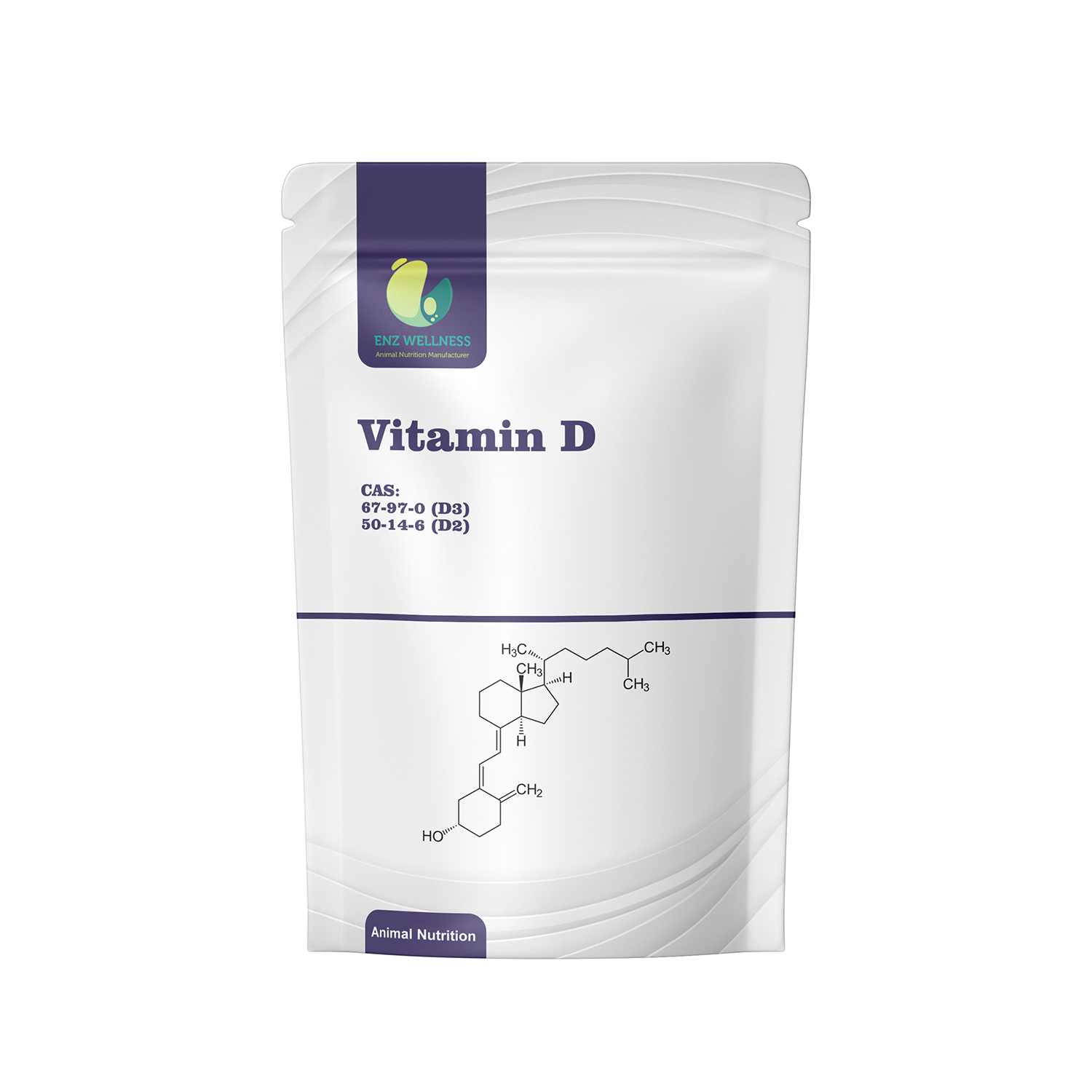
- Vitamin D₃ (Cholecalciferol): 67-97-0
- Vitamin D₂ (Ergocalciferol): 50-14-6
Molecular Formula of Vitamin D₃: C₂₇H₄₄O
Molecular Formula of Vitamin D₂: C₂₈H₄₄O
Structural Formula
Vitamin D₃: C₂₇H₄₄O
Vitamin D₂: C₂₈H₄₄O
Physicochemical Properties
Vitamin D₂ (Ergocalciferol) is generally a white to off-white crystalline material. It is practically insoluble in water and soluble in organic solvents such as ethanol, ether, and chloroform. It is sensitive to light and oxygen.
Vitamin D₃ (Cholecalciferol) is generally a white to off-white crystalline material with similar solubility characteristics. It is practically insoluble in water and sensitive to light, oxygen, and other environmental factors. Appropriate stabilization and packaging are therefore important for maintaining product quality during storage.
Application
Vitamin D is an essential fat-soluble vitamin widely used in poultry, swine, ruminant, livestock, and aquaculture nutrition. It plays a critical role in regulating calcium and phosphorus metabolism and supporting normal bone and skeletal development.
Vitamin D supplementation can help:
- Support calcium and phosphorus absorption and utilization
- Promote normal bone and skeletal development
- Maintain bone strength and structural integrity
- Support normal eggshell formation and quality in laying poultry
- Contribute to normal muscle and physiological function
- Support reproductive performance and overall animal health
- Help prevent nutritional vitamin D deficiency
Vitamin D₃ is commonly incorporated into vitamin premixes, compound feeds, and other animal-nutrition formulations to meet species-specific nutritional requirements and support consistent growth and production performance.