Vitamin B12 (Cyanocobalamin)
Introduction
Vitamin B12, also known as Cobalamin, is an essential water-soluble vitamin that plays an important role in red blood cell formation, DNA synthesis, amino acid metabolism, and normal nervous system function. It is also involved in energy and cellular metabolism and is particularly important for maintaining normal growth and physiological development.
Cyanocobalamin is one of the most widely used commercial forms of Vitamin B12 and is commonly incorporated into animal feed, vitamin premixes, and nutritional supplements.
CAS
68-19-9 — Cyanocobalamin (Vitamin B12)
Molecular Formula
C63H88CoN14O14P
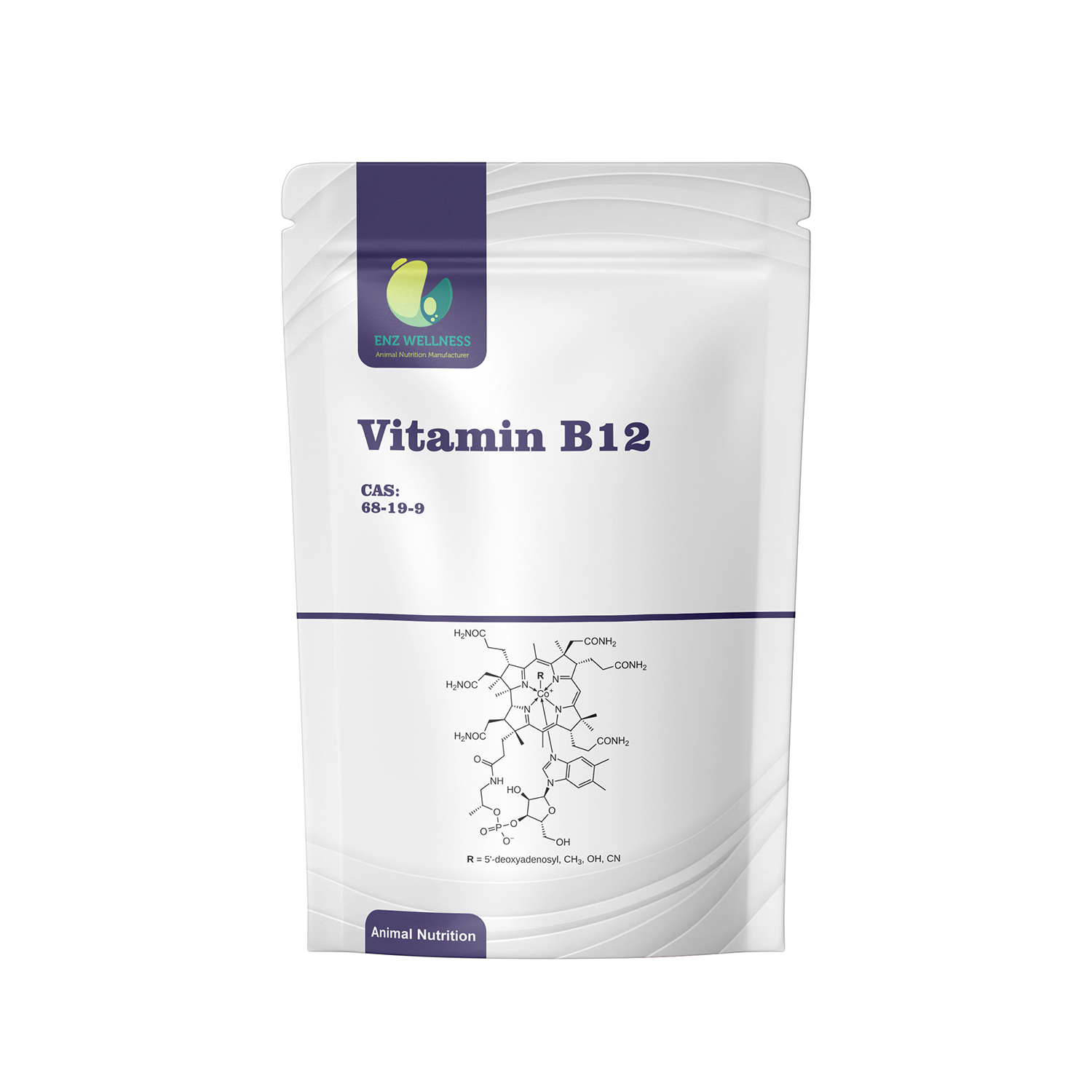
Structural Formula
Cyanocobalamin contains a complex cobalt-containing corrin ring structure characteristic of Vitamin B12.
Physicochemical Properties
Cyanocobalamin is a dark red to red crystalline powder or crystalline material. It is soluble in water, slightly soluble in ethanol, and practically insoluble in ether.
Vitamin B12 is sensitive to light and can be degraded under strongly acidic or alkaline conditions. It is comparatively stable under neutral conditions. Appropriate protection from excessive light, heat, and unfavorable pH conditions is recommended during storage and formulation.
Application
Vitamin B12 is an essential nutrient widely used in poultry, swine, livestock, ruminant, and other animal nutrition applications. It functions as a cofactor in several important enzymatic reactions involved in cellular metabolism, amino acid metabolism, and the synthesis of nucleic acids and blood cells.
Adequate Vitamin B12 supplementation helps:
- Support normal red blood cell formation
- Contribute to DNA and cellular metabolism
- Support amino acid and energy metabolism
- Maintain normal nervous system function
- Support healthy growth and development
- Contribute to normal reproductive function
- Help prevent Vitamin B12 deficiency
- Support overall animal health and production performance
Vitamin B12 is therefore an important component of animal feed, vitamin premixes, compound feed, and nutritional supplements, particularly where dietary Vitamin B12 supply may be limited.