Methionine
Introduction
Methionine is an essential sulfur-containing amino acid that plays an important role in protein synthesis, growth, metabolism, and overall animal performance. L-Methionine is the naturally occurring and biologically active form of methionine, while DL-Methionine is a racemic mixture containing both L-methionine and D-methionine. In animal nutrition, D-methionine can be converted into the L-form and subsequently utilized by animals.
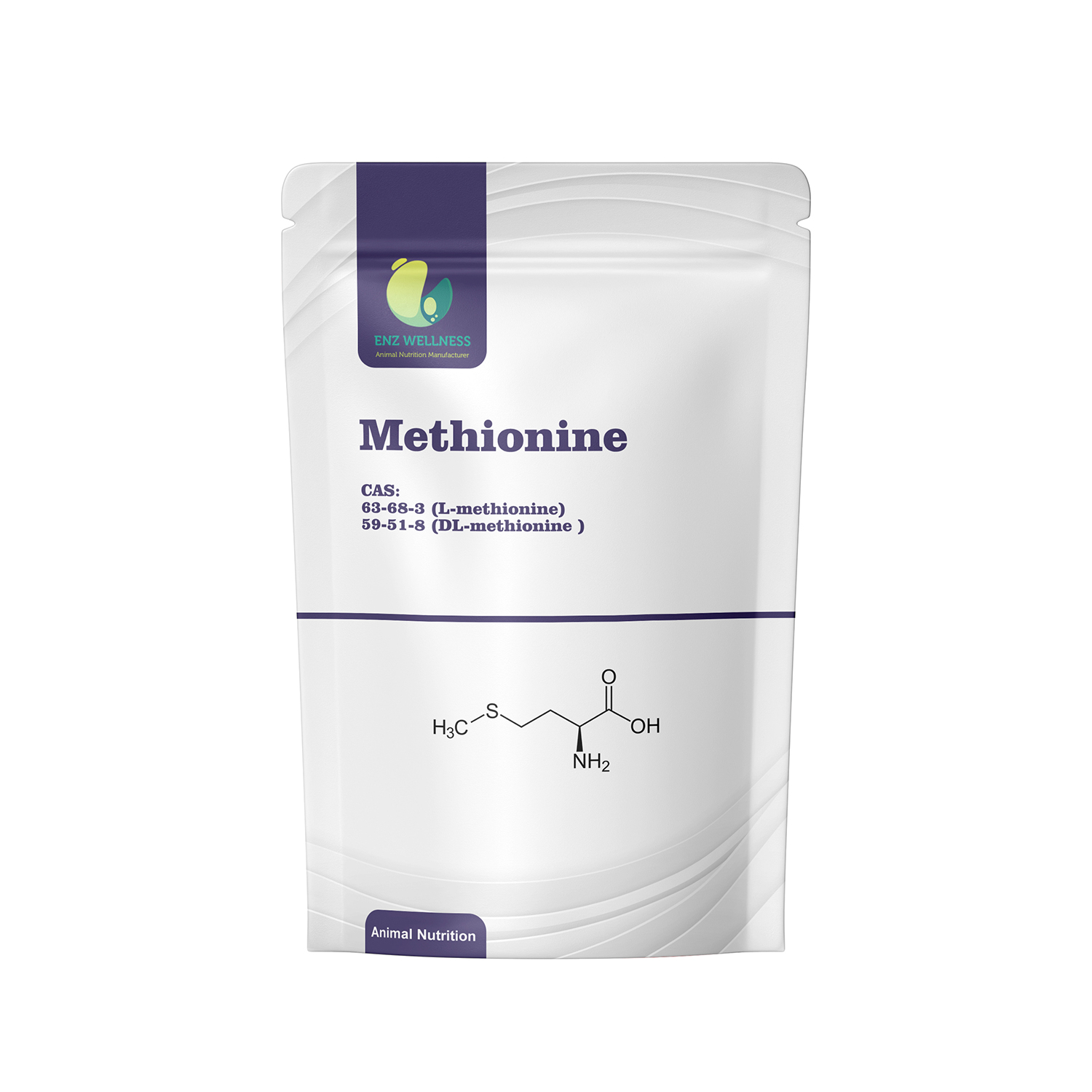
CAS No.
- L-Methionine: 63-68-3
- DL-Methionine: 59-51-8
Molecular Formula: C₅H₁₁NO₂S
Structural Formula: CH₃-S-CH₂-CH₂-CH(NH₂)-COOH
Physicochemical Properties
L-Methionine is a white crystalline powder with a characteristic odor and slightly bitter taste. It is slightly soluble in water and ethanol and practically insoluble in ether. It has good stability under normal processing and storage conditions and is relatively stable to heat, acids, and alkalis.
Application
Methionine is widely used as an essential amino acid feed additive in poultry, swine, livestock, and other animal nutrition applications. It is an important component of balanced feed formulations and helps meet animals’ dietary methionine requirements.
As a sulfur-containing amino acid, methionine plays a key role in protein synthesis, tissue development, methylation reactions, and antioxidant metabolism. In poultry nutrition, methionine is commonly considered one of the first-limiting amino acids, making adequate supplementation particularly important for balanced diets.
Methionine supplementation can help:
- Support protein synthesis and muscle development
- Promote healthy growth and tissue development
- Optimize dietary amino acid balance
- Improve feed utilization and nutritional efficiency
- Support feather development in poultry
- Contribute to normal methylation and metabolic processes
- Support antioxidant defense and overall animal health
- Help maintain production performance and feed efficiency
Methionine is widely incorporated into modern feed formulations to meet specific nutritional requirements and optimize the nutritional efficiency and performance of poultry, swine, ruminants, and other livestock.